Best Time Travel Movies for Deep Thinkers
Best Time Travel Movies for Deep Thinkers
Time feels linear. Past, present, future—a line you move along, always forward, never backward. This is the illusion time travel films shatter. They show you what happens when you step outside linear time: paradoxes cascade, causality fractures, and the solid ground of "before" and "after" becomes permeable. These aren't puzzle films. They're tools for recognizing that the time you experience is perception, not law. They invite you into non-linear consciousness—and in that invitation lies a genuine spiritual shift.
Why Time Travel Matters — Beyond the Puzzle
Most people watch time travel films trying to solve them: Does the paradox resolve? Is the timeline consistent? But these questions miss what matters. A time travel film works differently than a detective story. It's not asking you to understand the mechanics of time. It's asking you to experience what happens when linear thinking breaks.
In spiritual traditions, enlightenment often involves transcending time. You move from experiencing time as a line (past guilt, future anxiety, present disconnection) to seeing it as a whole—a landscape where all moments exist simultaneously. You recognize that the future isn't fixed because you're not trapped in the present moment; you're always already touching both. Time travel films create this experience. They show you characters discovering that time isn't what they thought. And if time isn't what you thought, then who you are—a being moving through time—becomes a genuine question.
The deepest time travel films don't explain this. They show it. You feel the vertigo of recognizing that cause doesn't have to precede effect. That your past might be something you can influence from the future. That every choice might branch reality into parallel timelines. These aren't academic questions. They're invitations to wake up to time as constructed, as navigable, as less solid than you assumed.
Timeline Theories Explained (For Deep Thinkers)
Time travel films work by exploring different theories about how time actually functions. Understanding these theories is key to understanding what each film is asking you to experience.
Time Loop / Bootstrap Paradox Imagine a moment that repeats infinitely. You wake up, live a day, and return to the same morning. Nothing changes except your consciousness. This creates what's called a "bootstrap paradox"—information or an object exists without ever being created. A song is written by someone who learned it from a recording made in the future of someone who learned it in the past. Where did it originate? The answer: nowhere. It's a closed loop with no beginning. Films using this theory explore: What happens when you accept that escape is impossible? What if the point isn't to break the loop but to wake up within it?
Grandfather Paradox & Causality Breaking Go back in time and kill your grandfather before your parent was born. You cease to exist. So how could you go back? This paradox reveals that causality—the assumption that cause precedes effect—might be an illusion. Films exploring this ask: What if you can't actually change the past because the past is already determined? Or what if changing the past creates a branching reality where you never existed, but the act of killing your grandfather happened anyway?
Many-Worlds Interpretation Every quantum event creates branches. You choose path A, reality splits into two: one where you chose A, one where you chose B. Both exist. Both are equally real. You can't experience both simultaneously, but they're both happening. Films using this explore: If your choice created an entire universe, what does responsibility mean? If infinite versions of you are making every possible choice, what makes your choice matter?
Predestination & Block Universe Time isn't a line; it's a 4-dimensional block. All moments—past, present, future—exist equally, like locations on a map. From our perspective, we move through time. But from the block's perspective, all moments already exist. You can't change the past because it's not behind you—it's beside you, equally real, equally fixed. Films exploring this ask: If the future is already written, is free will real? Or is the experience of free will itself the point?
Branching Timeline Theory Every time you travel back, you create a new timeline. The original past remains unchanged. You're now in a different timeline where your actions have consequences. Films using this explore: If you can never actually change your own past, what does redemption look like? Can you save a version of reality that isn't your own?
Closed Timelike Curves A path through spacetime that loops back on itself. You travel forward in time and end up in your own past. From your perspective, you're moving normally through time. From the outside, you're following a curve that intersects with itself. Films using this explore: What if you're not moving through time at all, but following a predetermined curve you can't see?
Films That Explore Time Loops (Recursion Without Escape)
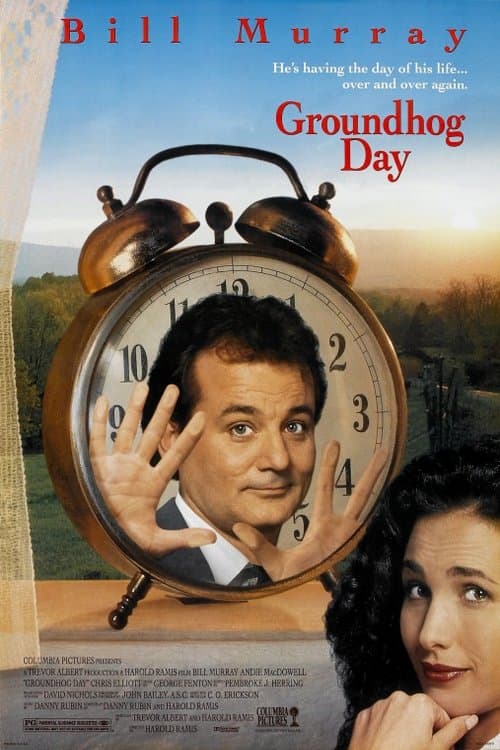
Groundhog Day doesn't ask "How do I escape the loop?" It asks "What happens when I stop trying to escape?" A man wakes up to the same day, repeating infinitely. Early in the loop, he panics. He tries everything to break free. But the film's real work happens when he stops fighting. He begins to notice things. To listen. To change not the day, but himself within the day. By the end, he's not escaping the loop—he's transcended it by accepting it. The shift is from resistance to presence. From "How do I get out?" to "What can I become while I'm here?"
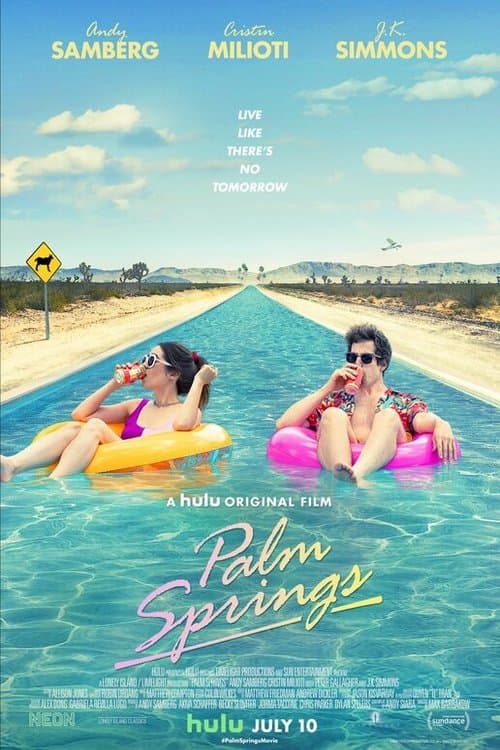
Palm Springs takes the loop into existential territory. Two people trapped in the same day, repeating forever, gradually recognize that escape might be impossible—and that acceptance might be the only freedom available. The film doesn't offer hope of breaking the loop. It offers something deeper: the possibility of connection and meaning within an endless present. It asks: If nothing you do changes tomorrow, what matters today?
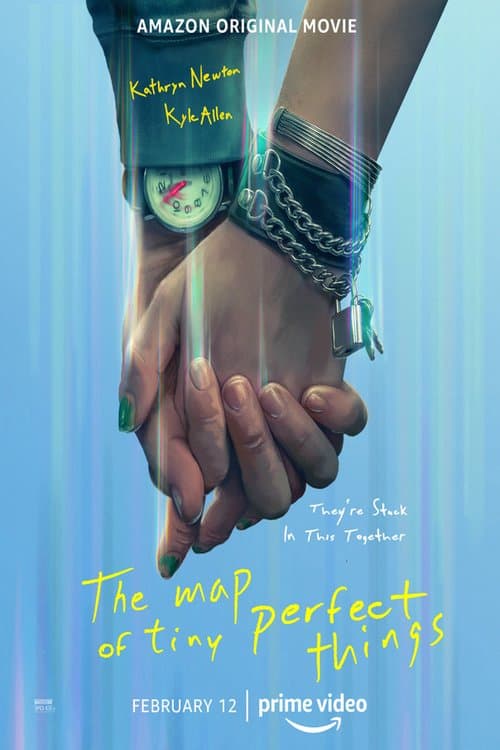
The Map of Tiny Perfect Things finds another answer: joy in recursion. Two people trapped in a time loop begin cataloging small perfect moments—a bird call, a jump in a lake, a moment of laughter. They're not trying to escape. They're learning to love the repetition. The shift is from "I'm trapped" to "I'm free to notice what I've been missing."
Films That Break Causality (The Grandfather Paradox)
12 Monkeys builds an entire world around causality breaking. A man travels back to prevent a plague. But everything he does seems to lead toward the very event he's trying to prevent. The film doesn't resolve this paradox. It asks you to live in it. By the end, you're sitting with the question: Did he cause the plague by trying to stop it? Or was the plague always going to happen, and his attempt to stop it was always part of that happening? The shift is recognizing that causality—the comfortable assumption that you cause your effects—might be an illusion.
Looper takes the paradox personal. A man is hired to kill targets that his future self sends back through time. Then his future self arrives as a target. He must kill himself. But if he succeeds, his future self never existed to be sent back. The paradox is inescapable. The film shows you a man trying to change his own past by erasing his future. The shift is realizing that you can't escape your own causality—you can only choose how to relate to it.
Predestination constructs an impossible loop where a person is their own grandfather and grandmother—and their own child. Every attempt to change the past creates the very circumstances that necessitated the time travel. The film asks: If your entire existence is a closed loop, with no beginning and no end, what does identity mean? The shift is from "I am a person moving through time" to "I am a moment in a loop that contains itself."
Primer is the film for deep thinkers who love physics. Two engineers accidentally invent time travel and begin creating increasingly complex temporal loops to accumulate wealth. But the more they manipulate time, the more they lose track of which timeline they're in, what they've already done, and who they are. The film doesn't explain itself. It gives you the experience of causality becoming so tangled that narrative breaks down. You feel what happens when you try to engineer time: you lose yourself in the machinery.
Films That Branch Reality (Many-Worlds Interpretation)
Avengers: Endgame made the Many-Worlds theory culturally mainstream. The Avengers travel back to retrieve infinity stones, but they're explicitly told: changing the past creates a branching timeline. The original past can't be altered. They can only create new realities. The film explores: If you save a version of reality that isn't your own, does it matter? If you sacrifice yourself to save a timeline you'll never see, is that redemption or delusion? The shift is recognizing that every choice branches reality—and every version of you is making a different choice in a different branch.
About Time uses time travel intimately. A man discovers he can travel back through his own timeline to relive moments. He uses this ability to improve his life: fix conversations, change outcomes, optimize his choices. But as the film progresses, he realizes something: the moments that matter aren't the ones you optimize. They're the ordinary ones you weren't trying to perfect. The shift is from "I can engineer the perfect life" to "The perfect life is the one I'm already living, if I stop trying to change it."
The Butterfly Effect shows what happens when you try to change your past without understanding branching timelines. A man travels back to fix traumatic moments from his childhood. Each time he changes something, he returns to a present that's radically different—and usually worse. He's not saving his original timeline. He's creating new ones where new horrors emerge. The film asks: If every change branches reality, and you can never undo the original trauma, what does healing look like? The shift is from "I can fix the past" to "I can only accept it and move forward."
Films That Transcend Time (Block Universe & Beyond)
Tenet inverts causality itself. Objects move backward through time, their entropy reversed. A character experiences time inverted—moving backward while the world moves forward. The film explores what happens when cause and effect reverse. It asks: If you're moving backward through time, are you still making choices? Or are you watching a predetermined path you're following in reverse? The shift is recognizing that causality might be directional only from your perspective—from outside time, all moments exist simultaneously.
Interstellar transcends time through love and physics. A father travels through a wormhole to save humanity, experiencing time at different rates than his daughter on Earth. Years pass for him; decades for her. By the end, he reaches beyond time itself to communicate with his past self through gravity—a force that exists outside time. The film suggests something profound: love is the only force that transcends temporal separation. The shift is from time as barrier to time as navigable dimension, and love as the navigation tool.
Arrival rewires how you perceive time itself. A linguist learns an alien language that restructures human cognition. Those who speak it begin to perceive time non-linearly. They see the future as clearly as the past. The film asks: If language shapes perception, and you learned to perceive time differently, would you still experience free will? The shift is recognizing that your experience of time as linear is linguistic, not fundamental. Change the language, change the experience of time.
How to Watch — Embracing Temporal Vertigo
These films work best when you stop trying to solve them. Turn off your need for consistency. Let the paradoxes sit. When causality breaks, don't reach for explanation—reach for experience. What does it feel like when the past isn't behind you anymore? What shifts in you when you recognize that your choices might be predetermined, or that every choice branches reality?
Many viewers feel disoriented after these films. That disorientation is the point. It's your mind recognizing that one of its fundamental assumptions—time as a line—might be constructed. Let that vertigo linger. Sit with it. That's where the shift lives.
Frequently Asked Questions
Which timeline theory is most scientifically accurate? Modern physics doesn't rule any out. Einstein's equations allow for closed timelike curves (time loops). Quantum mechanics suggests Many-Worlds is real—every quantum event creates branches. Block Universe isn't proven, but it's not disproven either. The point isn't which is "true." It's that time is stranger and less linear than experience suggests. Each theory is a lens for recognizing that limitation.
If the future is predetermined (Block Universe), is free will real? That's the question these films ask, not answer. One possibility: free will is real, but you're not positioned to see it from inside time. You experience choice in the moment, even if all moments already exist. Another: free will is an illusion, but the experience of free will is what creates meaning. The shift is recognizing that the question matters more than any answer.
Do these films suggest time travel is possible? Physics doesn't rule it out entirely. But the paradoxes suggest nature might prevent it—or resolve paradoxes in ways we don't understand yet. More importantly: these films aren't about whether time travel is literally possible. They're about recognizing that your experience of time as linear is just one way to experience time. Non-linear time perception is available now, through meditation, through presence, through recognizing that past and future are constructions of mind.
What does non-linear time perception mean for my actual life? When you stop experiencing time as a line you're trapped on, something shifts. You recognize that guilt (being stuck in the past) and anxiety (being stuck in the future) are perceptual distortions. You can access presence—the only moment that actually exists. You can recognize that your choices ripple through time in ways you can't fully see (Many-Worlds). You can accept what's already happened (Predestination) while still choosing how to relate to it. The shift is subtle but profound: time becomes less like a prison and more like a landscape you're learning to navigate.
Explore Related Themes
Each film on this page belongs to deeper thematic territories. Explore them:
- Time Travel — Stories that fold past and future into the present
- Time Loop — The same moment repeated until you learn to live it
- Free Will and Fate — How much you steer vs. what's already written
You might also read:
- Mind-Bending Movies That Challenge Reality — Films as Tools for Awakening, which explores the philosophy behind our entire collection
- Movies That Make You Question Reality, which organizes films by the dimension of reality they question
What would it mean to experience time differently? Not as a line you move along, but as a landscape you can navigate from any direction? These films offer that experience. That's why they matter.