Primer
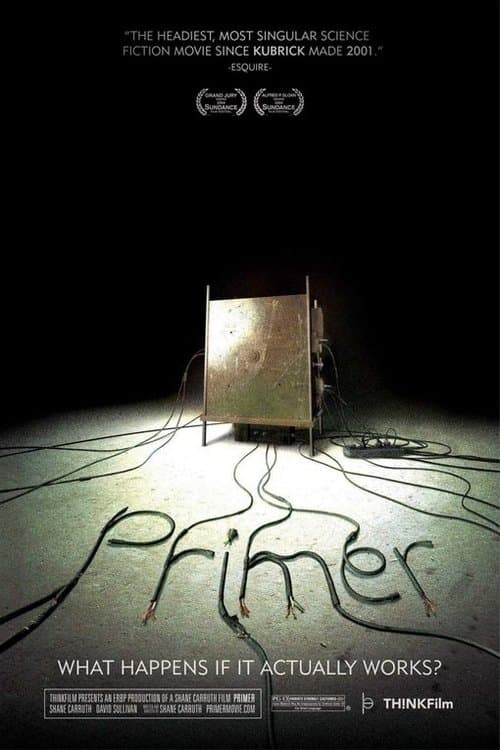
Two engineers invent time travel and the film asks not 'can it be done' but 'what happens to you when you gain power no one was prepared to wield?' You're drawn into the vertiginous experience of absolute advantage-the moment when you have knowledge no one else possesses and must decide how to use it. The central question is what happens to trust, to relationship, to your own moral clarity when information becomes power. The film suggests that power doesn't corrupt; it reveals. It strips away the constraints that kept you ethical and asks you to see yourself clearly. What emerges is not evil but something more unsettling: the ordinary person you are becomes visible when given the tools to remake the world.
What Primer may shift in how you see everyday reality
This film may shift your understanding of trust from something stable into something fragile and contingent on shared information. Watching this, you may find yourself questioning what you would do with an advantage no one else possessed, and whether knowledge is a burden that changes who you are.
Questions to hold after watching Primer
If you knew something no one else did, how long could you keep the knowledge to yourself?
What would you do first if you could change one decision from your past?
How does having more information than someone else change how you relate to them?
What aspects of yourself become visible when you have absolute power to remake things?
Primer themes worth sitting with
- what you would do if you could undo your most recent mistake
- how power over time would change your relationship with other people
- the trust that gets eroded when one person knows more than another
- what integrity costs when no one would ever know