Simulation Theory Movies — Films That Ask If Reality Is What It Seems
Simulation Theory Movies — Films That Ask If Reality Is What It Seems
What if the reality you perceive isn't the only reality? What if the world you trust is a layer, a construction, something that can be seen through? Simulation theory films ask this question—not as intellectual puzzle, but as invitation to awakening. They show you the disorientation of discovering that what you thought was solid is porous. These films use simulation as a mirror for consciousness work: the possibility that waking up to the constructed nature of reality is itself the path to enlightenment.
What Is Simulation Theory?
Simulation theory is the philosophical premise that the reality we experience might be artificial—constructed, layered, or fundamentally different from what our senses tell us. The idea isn't new. Plato's Cave describes prisoners chained in darkness, seeing only shadows on a wall and mistaking them for reality. Descartes asked: how do I know I'm not dreaming? Contemporary physicists have asked variations of the same question: could our universe be a simulation, a construct, a dream in another mind?
But simulation theory here isn't about whether the Matrix is technically real. It's about recognizing that what we call reality is constructed—by our conditioning, our beliefs, the systems we were born into, the stories we inherited. You move through the world as if it's solid, fixed, inevitable. A simulation theory film cracks that assumption and shows you the mechanics underneath. It asks: what if what you thought was given is actually built? What if what you thought was inevitable is actually chosen—or what if your sense of choice itself is constructed?
This is where simulation theory becomes a tool for awakening.
How Simulation Theory Relates to Awakening and Enlightenment
In spiritual traditions, awakening means recognizing illusion. You wake up to the fact that you've been operating inside beliefs you didn't choose. You notice the constructed nature of identity, of reality, of what you thought was true. Enlightenment, in many traditions, is the recognition that what appears solid—the self, reality, separation—is actually malleable, interconnected, fundamentally different from how it seems.
Simulation theory films work the same way. They don't explain awakening; they create the experience of it. You watch a character (or yourself through the film) gradually recognize that the world they trusted is layered, constructed, not what it appeared. That moment—when the ground shifts—is an awakening experience. The film doesn't hand you answers. It hands you disorientation. And in that disorientation, something real can shift.
The liberation isn't intellectual. It's not "the world might not be real, so nothing matters." It's the opposite. If what you thought was fixed is actually constructed, then you have more agency than you realized. If the "reality" that seemed inevitable is actually a layer you can see through, then who you are beyond that layer becomes a genuine question. That's enlightenment in its simplest form: seeing through illusion to what remains.
Films That Question If Reality Is Constructed
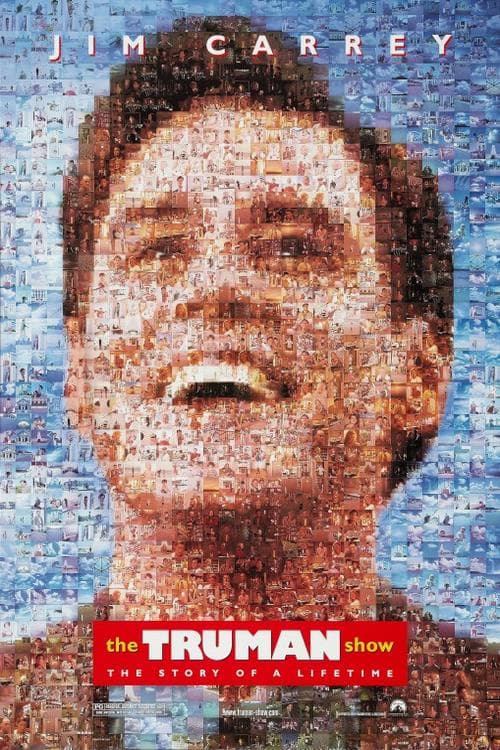
The Truman Show is the gentlest entry into simulation awareness. You watch a man live his entire life without knowing that his world is built, that everyone around him is performing, that the sun and moon are on timers. The film never lectures about the horror of this. Instead, it shows you Truman's quiet curiosity—the way he notices small inconsistencies, the way he's drawn to the edges of his world. By the end, he chooses to walk through the door anyway. It's not about whether the outside world is "real." It's about the moment of choosing to see, knowing that seeing will change everything.
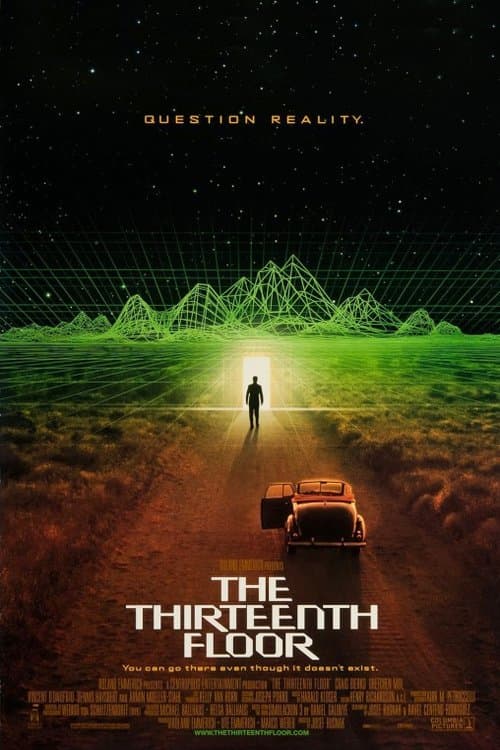
The Thirteenth Floor stacks realities on top of each other like a Russian nesting doll. A character discovers that his world is a simulation, created by people in another world—who themselves might be simulated. The vertigo deepens with each layer. The film asks: at what level does "real" begin? If a constructed world is indistinguishable from an "original" one, what makes one more real than the other? The inner shift isn't about solving the puzzle. It's about sitting with the question: what is reality, actually?
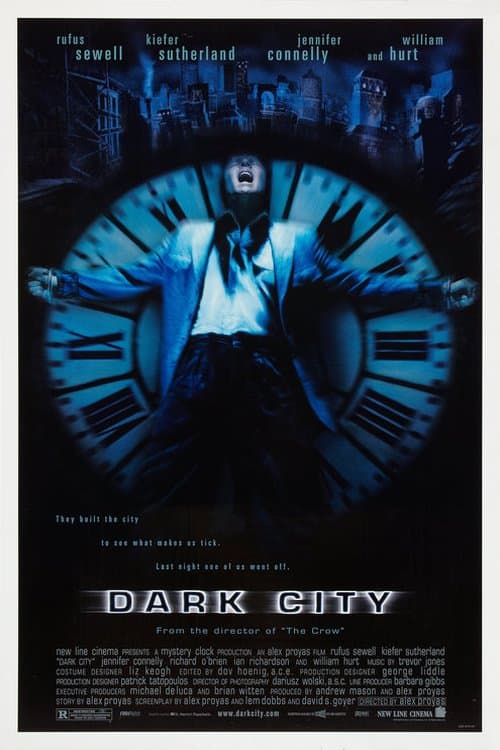
Dark City shows a world where memory is edited, where the past is rewritten nightly, where the citizens of a city are living in a constructed moment that repeats. But the film isn't about the conspiracy. It's about a character beginning to remember, beginning to question why his memories don't align with the official story. The shift is from unconscious acceptance to conscious doubt. From living in the simulation to beginning to see it.
Films That Show the Disorientation of Seeing Through
eXistenZ blurs the boundary between the game being played and the reality in which the game is played until you can't tell which is which. The film doesn't resolve this ambiguity. Instead, it asks you to sit with it—to feel the vertigo of not knowing which layer is "real." That disorientation is the point. It mirrors the spiritual experience of recognizing that the identity you thought was solid is also a kind of game, a construct, layered on top of something you can't quite see.
Total Recall takes the question further: if your memories are not your own, who are you? A man discovers that his entire identity might be implanted, that the person he thought he was might be a role he's playing. The horror isn't external. It's the recognition that the self you trust—your history, your motivations, your sense of continuity—might be artificial. The film doesn't give you answers about what's real. It gives you the experience of identity dissolving, of the ground beneath the self cracking open.
Vanilla Sky pulls you into the dream without warning. A man's life fractures, and you're never quite sure whether you're watching reality, memory, dream, or something in between. The film works because it doesn't explain itself. It gives you the experience of consciousness fragmenting, of the rules of reality becoming unstable. You feel what it's like when the solid world becomes permeable.
Films That Explore What Remains When You Wake Up
Inception asks the question that hangs after awakening: how do you know you're awake? The film layers dream on top of dream and asks whether the deepest level is reality or just a deeper dream. But the real question isn't about the plot puzzle. It's about what matters when you recognize that reality itself might be constructed. If you can't know for certain which level is real, what do you do? You choose to act as if meaning matters. You choose to return to what you love. The awakening isn't about finding certainty. It's about choosing to live anyway.
Source Code explores identity and consciousness across repeated moments. A character relives the same eight minutes over and over, gradually recognizing the constructed nature of his experience—but also discovering that something remains constant across the repetitions. Consciousness. Choice. Connection. The film suggests that even in a loop, even in a constructed reality, what matters is what you choose to do with the moment you're in.
How to Watch — Creating Space for the Shift
These films work differently than entertainment films. They don't reward passivity. Turn off your phone. Give them your full attention. Let yourself feel disoriented when the ground shifts. Don't rush to solve the puzzle or find certainty. Sit with the vertigo. That's where the shift lives—in the moment when your assumption about reality cracks and you don't yet know what replaces it.
Many of these films are unsettling. That's intentional. The discomfort is the film doing its work. After watching, sit for a moment. Don't immediately reach for distraction. Notice what changed in how you see. The point isn't to "figure out" the film. The point is to notice what the film shifted in you.
Frequently Asked Questions
What's the difference between a simulation theory film and just a complicated plot? A complicated plot makes you think harder about the story. A simulation theory film makes you think differently about reality itself. The shift is from "how does this plot work?" to "what does this mean about how reality works?" You might carry the question out of the theater and into your ordinary life.
If reality might be constructed, does it matter what I do in it? The opposite conclusion from what it seems. If what you thought was given is actually constructed, then you have more power than you realized. The rules aren't as fixed as they seemed. Your choices matter more, not less. Awakening isn't about giving up. It's about recognizing that you have agency you didn't know you had.
Are these films saying "nothing is real" or "give up on meaning"? No. They're saying the opposite. They're saying: if you stop treating reality as a fixed thing and start seeing it as constructed, meaning becomes your responsibility rather than something given to you. You can't hide behind "that's just how things are." You have to choose what matters.
How do I tell if I'm seeing a simulation or just watching a movie? You're watching a movie—and the movie is showing you the disorientation of recognizing simulation. That disorientation is portable. It doesn't belong to the characters on screen. It belongs to you. Let it work on you. Notice what shifts in how you see your own reality.
Explore Related Themes
Each film on this page belongs to deeper thematic territories. Explore them:
- Simulation Reality — The world you trust may be a construction
- Awakening — The movement from autopilot to seeing clearly
- False Perception — When what you perceive can't be trusted
You might also read:
- Mind-Bending Movies That Challenge Reality — Films as Tools for Awakening, which explores the philosophy behind our entire collection
- Movies That Make You Question Reality, which organizes films by the dimension of reality they question
What would it mean to genuinely question whether your reality is constructed? Not to escape it, but to wake up within it—to recognize the difference between what you thought was inevitable and what you actually chose. That's what these films offer. That's why they matter.