Donnie Darko Explained — What the Film Asks of You
Donnie Darko Explained — What the Film Asks of You
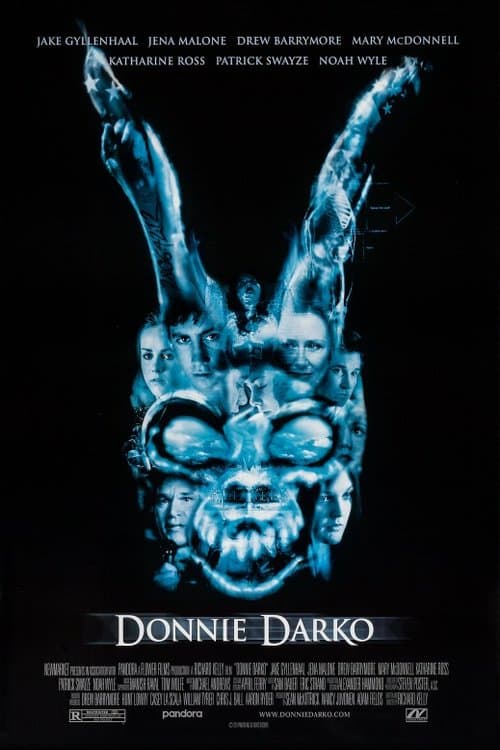
If you searched for "Donnie Darko explained," you probably want the tangent universe and the jet engine unpacked. We won't do that here — plot mechanics spoil this film and miss its point. What's worth explaining is the question underneath: why does an unresolved mystery leave so many viewers quietly reordering what they believe their life is for?
Why "Donnie Darko Explained" Isn't the Right Question
Most people searching for this film want a decoder ring. But Donnie Darko was built to resist exactly that kind of resolution. It gives you enough information to construct a theory and just enough ambiguity to make you doubt it — and that discomfort isn't a flaw in the writing. It's the point. A film that handed you a clean answer would let you close the laptop and move on. This one keeps you turning it over on the drive home, at your desk the next day, in the shower a week later.
That refusal to resolve is what separates Donnie Darko from a puzzle box like Coherence, which wants you to work out exactly what happened. Donnie Darko is less interested in you solving it than in you sitting inside the not-knowing, and noticing what that not-knowing stirs up in you. Our companion piece on what Annihilation asks of you traces the same refusal in a film that closes on an image rather than an explanation.
What Donnie Darko Is Really Asking You to Sit With
Strip away the science-fiction scaffolding and Donnie Darko is a film about a teenager who suspects, quietly and without proof, that his life carries a weight other people's lives don't. That suspicion is presented as strange, even frightening — but it isn't unfamiliar. Most of us have carried some version of it: the sense that we're meant for something we can't name, paired with the fear that believing this makes us unwell rather than perceptive.
The film never resolves which of those is true for Donnie, and it doesn't resolve it for you either. Instead, it asks you to notice how quickly you rush to diagnose that feeling in yourself — to call it delusion, or ego, or something to explain away — rather than sit with the possibility that some part of what you sense about your own life might be worth trusting. Mr. Nobody asks a related question from the opposite angle, dwelling in the paralysis of a life where every choice still feels open. Donnie Darko goes the other way: it wonders what happens once you suspect a particular path is already yours, whether you understand why or not.
The Isolation Donnie Darko Names So Precisely
Beneath the destiny question is a plainer one, and it may be the film's real subject: what happens to someone who sees the people and systems around them clearly enough to notice how much performance holds everyone together. Donnie's friction with his school, his therapist, and the adults meant to be guiding him doesn't come from rebellion for its own sake. It comes from an inability to unsee what everyone else has quietly agreed to stop looking at.
You may recognize this if you've ever sat in a room full of people nodding along to something you couldn't make yourself believe. Donnie Darko doesn't resolve whether that clarity is a gift or a symptom — it lets both readings sit in the same frame, which is closer to how the feeling actually lands in a life. Everything Everywhere All at Once arrives at a similar ache from a completely different door, following someone who feels unequal to the scale of everything she's supposed to hold together.
What Donnie Darko May Shift in You
This film may loosen the automatic assumption that feeling out of step with everyone around you is something to correct rather than examine. Watching this, you may find yourself reconsidering a private sense of purpose or difference you've been quick to talk yourself out of — the one you've learned to keep to yourself because naming it out loud felt like too much. Donnie Darko doesn't ask you to act on that sense recklessly. It asks whether dismissing it entirely is really the safer choice you've told yourself it is.
It may also shift how you relate to unresolved questions generally. The film trains you, almost against your will, to tolerate an ending that won't fully close — which is a rehearsal for the larger unresolved questions most people spend a lifetime trying to outrun. Source Code offers a gentler version of this same practice, asking what a moment lived more fully is worth even when nothing about the outcome is guaranteed.
Where to Go After Donnie Darko
If what stayed with you was the vertigo of a single choice mattering more than you can prove, Cloud Atlas widens that same feeling across centuries and different lives. If it was the isolation of seeing too clearly, sit with Everything Everywhere All at Once next. Our multiverse theme page places Donnie Darko alongside films built from the same uncertainty about which path is actually yours, and if the pull toward fate and choice is what's staying with you, our free will and fate theme page gathers more films built around that exact tension. For a broader set of films that unsettle your sense of what's real, our best multiverse movies collection is a good next stop, as is our piece on movies that make you question reality. And if it was the performance at the center that held you — that particular register of someone not quite at home in his own life — our ranking of Jake Gyllenhaal movies by what they shift in you follows that quality across his career.
Frequently asked questions
What does Donnie Darko mean? There's no single agreed-upon meaning, and that's part of the design. Most readings circle the same core question — whether Donnie's sense of a larger purpose is delusion or perception — without ever settling it, which is closer to how the film wants you to leave it.
Is Donnie Darko about mental illness or destiny? The film keeps both readings alive at once rather than choosing one. It's less interested in diagnosing Donnie than in showing how thin the line can feel between being unwell and being the only person in the room willing to see clearly.
What movies are like Donnie Darko? Mr. Nobody and Coherence share its interest in branching, uncertain paths, while Everything Everywhere All at Once shares its ache around feeling unequal to what your life might be asking of you.
Do you need to understand the ending to enjoy Donnie Darko? No. The film rewards a first watch built on feeling rather than decoding. Understanding can come later, if it comes at all — the discomfort of not knowing is where most of its value lives.
Donnie Darko was never going to hand you a tidy explanation, and by now you may understand why that was always the more honest choice. If you found yourself naming a private sense of purpose you've been quick to dismiss, sit with that a while before you rush to explain it away.
Want one film like this every Friday? Join the Friday MindShift.