Annihilation Ending Explained — What the Film Asks of You
Annihilation Ending Explained — What the Film Asks of You
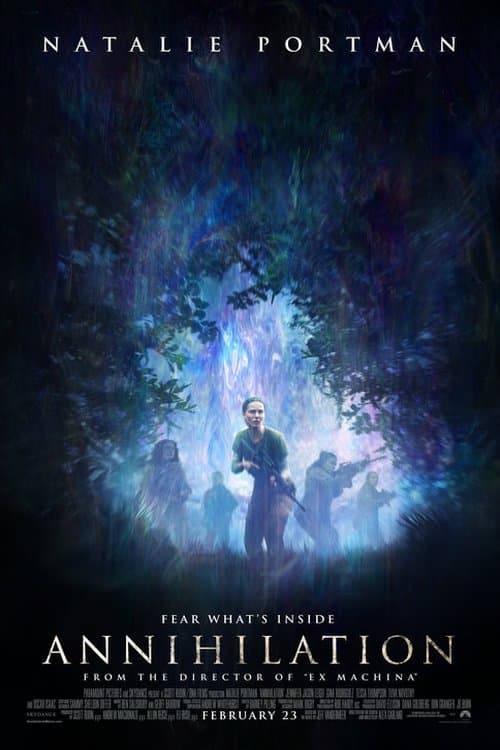
If you searched for "Annihilation ending explained," you are probably after a diagram: what the lighthouse was, what the final sequence means, whether what came out is what went in. We will not do that here. The mechanics are the least interesting thing this film has. What is worth explaining is why an ending that declines to resolve leaves so many viewers quietly examining their own capacity for self-destruction.
Why "Annihilation Ending Explained" Isn't Quite the Right Question
Searching for an explanation assumes the film is withholding one. It isn't. Annihilation is built so that the harder you press on its final movement, the less it behaves like a puzzle with a solution underneath. You are given exactly enough to construct a reading, and then the ground you would need to confirm that reading is quietly removed.
This is a different project from Ex Machina, which also withholds, but withholds a fact. There, something specific happened, and you are invited to work out what. Annihilation withholds a category. You are not missing a piece of information you could go and find. You are being asked to consider that the question you arrived with — what really happened? — may not be the question the film is answering.
The discomfort at the end is not a failure of your attention. It is the delivery.
What Annihilation Is Really Asking You to Sit With
Set the science fiction aside and this becomes a film about the difference between destruction and transformation, and how rarely anyone can tell the two apart while they are happening from the inside.
Its most-quoted idea — that almost none of us commit suicide, but almost all of us self-destruct — is not a line about pathology. It is a plain description of ordinary life. You have likely watched yourself dismantle something that was working. A relationship you undercut. A discipline you abandoned three weeks before it would have paid off. A version of yourself you had spent years assembling and then, with something close to relief, took apart.
And you probably could not say at the time whether you were ruining it or outgrowing it.
Annihilation offers no test for telling those apart. It goes further and suggests there may not be one — that the same impulse produces both outcomes, and the meaning gets assigned afterward by whoever is left to assign it. This is why the film unsettles people who arrive expecting a creature feature. It has quietly moved the horror inside the viewer before the third act begins.
The Refraction Annihilation Names So Precisely
Underneath the self-destruction question sits a stranger one about identity. The film's governing image is refraction: everything inside the zone bends what passes through it, and what emerges carries the shape of everything else it has touched. Nothing is destroyed. Nothing stays itself either.
That is a fair description of a life. The person you are now is made of borrowed gestures, inherited fears, the phrasing of someone you loved at twenty-three, a caution you absorbed from a parent who never named it out loud. You did not choose most of it. It arrived by contact.
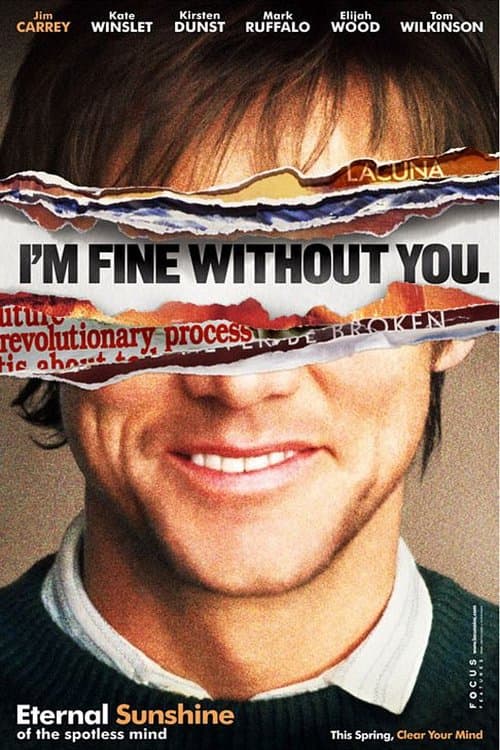
Eternal Sunshine of the Spotless Mind approaches this from the tender side, asking what remains of you when a specific set of contacts is removed. Annihilation approaches it from the cold side, asking whether the boundary you defend as yourself was ever a boundary at all, or only a habit of speaking about a process as though it were a thing. Cloud Atlas widens that same question across centuries and bodies, but Annihilation keeps it uncomfortably close — one person, one body, one week.
The film does not present this as loss. That is the part most viewers do not expect. It presents it as the actual mechanism, and treats grief over it as understandable but slightly beside the point.
What Annihilation May Shift in You
This film may loosen the assumption that change and damage are separate categories that you can sort your life into after the fact. Watching this, you may find yourself reconsidering a period you have long filed under my worst years and noticing how much of who you are now came out of exactly that stretch — not despite it, and not as a redemption arc, but as ordinary refraction.
It may also change your relationship to the parts of yourself you have been trying to hold steady. Most of us spend real energy defending a fixed account of who we are, and treat every deviation from it as slippage to be corrected. Annihilation asks a plainer question: what if the defending is the strain, and not the changing?
There is a third shift, quieter than the others, and it tends to arrive days later. The film may make you more honest about the difference between a decision you made and a decision that made you. Its characters walk toward something none of them can justify wanting. If you have ever done that — taken a job, ended something good, moved somewhere with no argument you could make out loud — you may recognize the pull the film is describing, and stop insisting to yourself that it must have had a reason. 12 Monkeys circles this same question from the direction of fate rather than desire, and the two films rhyme in a way that is worth noticing.
Where to Go After Annihilation
If what stayed with you was the vertigo of a self that will not hold still, our identity shift theme page gathers films built from that instability. If it was the stranger, calmer feeling underneath — that the dissolving might not be the tragedy you assumed — sit with our letting go of control theme page instead.
For a next film rather than a next idea, Arrival is the closest companion: another encounter with something that changes the person who studies it, told with more warmth and the same refusal to let understanding arrive without cost. Our best consciousness movies collection places Annihilation alongside films that work on the viewer the same way, and our piece on movies like Arrival traces the thread from encounter to transformation across six more titles. If the unresolved-ending discomfort is what you want more of, our readings of Donnie Darko and Interstellar take the same approach to two films that leave their endings open in very different registers — one cold, one warm.
Frequently asked questions
What does the ending of Annihilation mean?
There is no settled meaning, and the film is constructed to keep it that way. The readings that hold up best treat the ending as a question about whether transformation and destruction are actually different things, rather than a reveal that can be decoded. Sitting in that uncertainty is closer to the intended experience than resolving it.
Is Annihilation about grief or self-destruction?
Both, and the film treats them as the same motion viewed from different distances. It is more interested in the ordinary, unspectacular way people dismantle their own lives than in any single loss, which is why it lands hardest on viewers who recognize the pattern in themselves.
What movies are like Annihilation?
Arrival is the closest match for its central idea that understanding something changes you permanently. Ex Machina shares its cold intelligence, and Eternal Sunshine of the Spotless Mind asks a related question about what survives when parts of you are removed.
Do you need to read the book to understand Annihilation?
No. The film diverges from Jeff VanderMeer's novel substantially and works as its own thing. Reading the book afterward is rewarding, but going in with it as a key will mostly produce frustration at the places the film chose differently.
Is Lena a clone at the end of Annihilation?
The film never confirms it. The final shot gives you a flicker in her eyes and a husband who may or may not be who he was, and then it stops. Whether she is a copy, a changed original, or something that no longer fits either word is the open question the ending hands you — which fits a film about refraction rather than replacement.
Annihilation was never going to hand you a clean explanation, and by now you may see why that was the more honest choice. If it surfaced a stretch of your life you have long filed under damage, let the file stay open a while before you close it again.
Want one film like this every Friday? Join the Friday MindShift.