Christopher Nolan Movies Ranked by What They Shift in You
Christopher Nolan Movies Ranked by What They Shift in You
Christopher Nolan movies ranked by scale give you one order. Ranked by what they shift in you, the list rearranges itself: Memento sits at the top, Inception and Interstellar just beneath it, and the largest films fall lower — not because they are lesser, but because they leave less of themselves in you afterward.
Why Rank Christopher Nolan Movies by Inner Shift
Nolan is usually ranked by ambition — budget, running time, structural difficulty, how hard the film is to follow on a first pass. That ranking is easy to produce and tells you almost nothing about which film to put on tonight.
There is a thread running through all of his work that has nothing to do with scale. Every Nolan film is built around a person who has decided what is true and organized their life around that decision. The film then applies pressure to the decision. Sometimes it holds. Usually it does not.
What separates the films, then, is not how intricate the structure is but how close that pressure gets to the person watching. A film can be complicated and still leave you untouched. Another can be simple in shape and follow you into the next week. This ranking is ordered by that second quality.
Christopher Nolan Movies Ranked by What They Shift in You
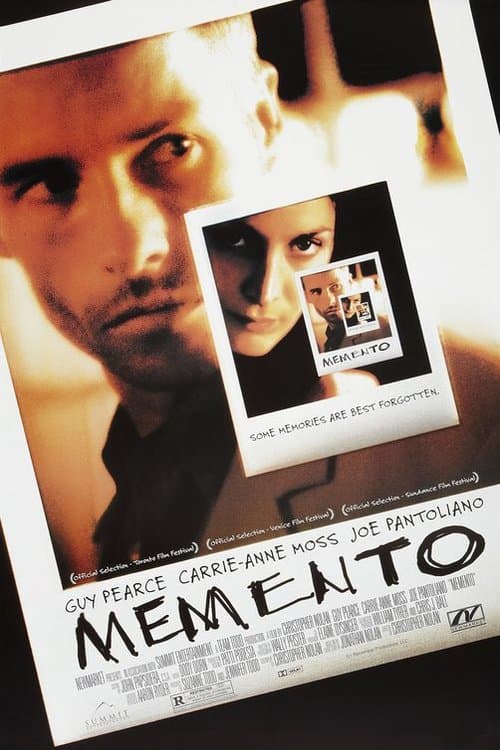
1. Memento — What You Trust Without Checking
Memento is the one that changes people, and it does it by removing the single thing you never think to question: that your account of your own life is roughly accurate.
Watching this, you may find yourself noticing how much of your certainty about yourself rests on a story you have told so many times you no longer verify it. The film does not argue the point. It puts you in a position where you cannot verify anything either, and lets the discomfort do the work. It sits at the center of what Memory and Self holds.
If it lands, the natural next film is Eternal Sunshine of the Spotless Mind, which asks a version of the same question with warmth instead of dread.
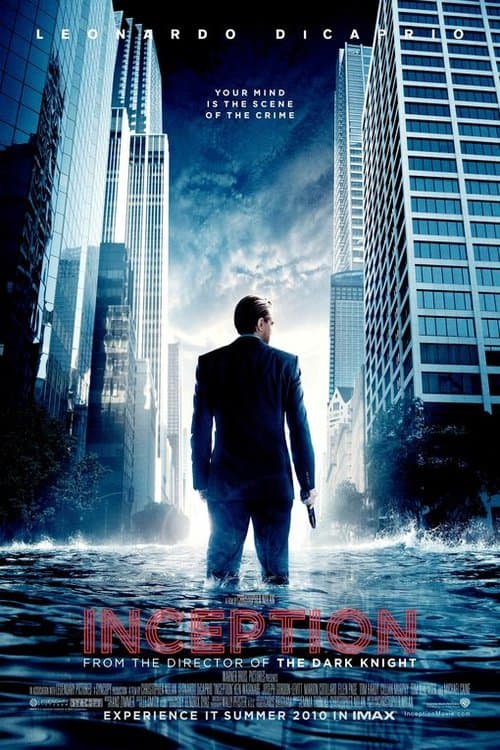
2. Inception — The Ideas You Did Not Choose
Inception is remembered for its architecture and for the argument it started. Neither is the part that stays.
The part that stays is the premise underneath: that an idea can be placed in a person and then experienced, from the inside, as their own conclusion. Once you have sat with that, it becomes harder to hold your own positions with the same confidence — about your work, your relationships, what you say you want. This film may shift how you distinguish between what you decided and what was installed. It belongs to Dream Reality as much as to any thriller tradition.
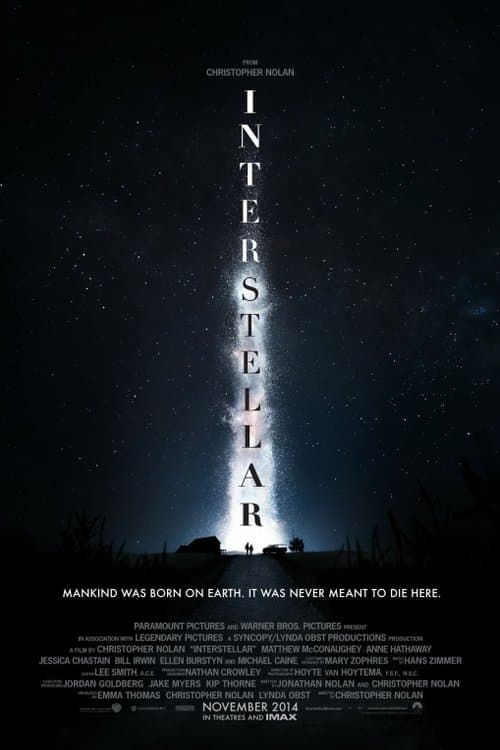
3. Interstellar — The Cost of Leaving
Interstellar is the most emotionally exposed film Nolan has made, and this ranking rewards that.
Its shift has little to do with physics. It has to do with what it means to make a decision whose consequences you will not be present for. Our Interstellar ending explained reading stays with that question rather than the physics. Watching this, you may find yourself thinking about the people who are getting older while you are busy, and about what you are choosing without ever calling it a choice. We follow that thread further in our collection of movies like Interstellar; for the same question in a quieter register, Arrival reaches it from the other direction.
4. The Prestige — What You Are Willing to Pay
The Prestige is the coldest film on this list and the one most often underrated on a first watch.
Its subject is commitment carried past the point of sense — the way a person can pursue something so completely that the pursuit consumes the self it was meant to serve. This film may shift how you look at your own capacity for obsession, particularly the kind you have been calling discipline. It asks what you are paying for the thing you want, and whether you have ever actually totalled it.
5. Oppenheimer — Living With What You Did
Oppenheimer is the most direct film Nolan has made about consequence, and it earns its position here by refusing to resolve.
Its shift is quieter than the subject suggests. It sits in the gap between doing something because you are able to and having to live afterward inside the result — the version of you that acted, and the version that has to keep being that person. Watching this, you may find yourself examining a decision of your own that you have never quite finished having.
6. Tenet — Fate Without the Consolation
Tenet is the film most often called Nolan's coldest, and the temperature is doing something.
It proposes that the future may not be as open as you assume, and it declines to attach the reassurance that films usually offer alongside that idea. This film may shift how casually you use the word "choice," which puts it in direct conversation with Free Will and Fate. If that question interests you more than the mechanics do, 12 Monkeys asks it with more feeling and less noise.
7. Dunkirk — Time as Something You Are Inside Of
Dunkirk shifts something narrower than the films above, but it shifts it cleanly.
It is an experiment in how differently time moves depending on where you are standing inside an event — an hour, a day, a week, all running at once. What it can leave you with is a working sense of how unreliable your own read on duration is, and how little your experience of a stretch of time tells you about its actual length.
8. The Dark Knight — The Story You Need to Be True
The Dark Knight is the most technically assured film in the filmography and the one that asks the least of the person watching it.
That is not a fault; it is a different job. Its one lasting question — whether people are owed a comfortable version of events or an accurate one — is worth sitting with. But the film delivers that question and then moves on, where the films above hand it to you and leave.
Where The Odyssey and the Early Films Sit
The Odyssey arrived in July 2026 and is still too new to place honestly. A ranking by inner shift needs enough distance to know what actually stayed, and six weeks is not that. It will be added here once there is something real to say about what it leaves behind.
Following and Insomnia sit outside the ranking for a different reason. Both are recognizably Nolan in preoccupation — an unreliable account, a person who cannot trust their own read on events — but neither yet applies the pressure the later films do. They are worth watching for the through-line, not for the shift.
How to Watch a Nolan Film for the Shift Rather Than the Puzzle
Resist the puzzle. These films invite you to spend the entire running time solving the structure, and solving it is the most reliable way to feel nothing.
Watch instead for the moment a character's certainty gives way, and notice what you were holding as you watched it go. The structure is a delivery mechanism. The question underneath is the film. If you find yourself rewinding to confirm a detail, that is usually the puzzle winning.
Frequently asked questions
What are the best Christopher Nolan movies?
Ranked by what they leave in you rather than by scale, Memento comes first, followed by Inception and Interstellar. Memento holds the top position because it unsettles something most films never touch — your confidence in your own account of your life.
What is the best Christopher Nolan movie to start with?
Inception is the most forgiving entry point, because it rewards a first viewing without demanding one. If you want the version that asks more of you immediately, start with Memento and accept that you will not have your footing for the first twenty minutes.
Which Christopher Nolan movie is the hardest to understand?
Tenet, by most accounts — though difficulty and depth are not the same measure. Memento is harder to hold structurally and far easier to feel. If intricacy is what draws you, our collection of mind-bending movies that challenge reality ranges wider than one director.
Are Christopher Nolan movies worth watching twice?
Most reward a second viewing, though for a different reason than the one usually given. The rewatch is not for catching a detail you missed; it is for watching without the work of following, which is when Interstellar and The Prestige tend to land hardest.
A ranking like this is really a claim about pressure — which films press on something you were already carrying before you sat down. If Nolan's version of that pressure interests you, the wider question runs through our collection of movies that make you question reality, where the ground gives way in more than one direction.
Want one film like this every Friday? Join the Friday MindShift.