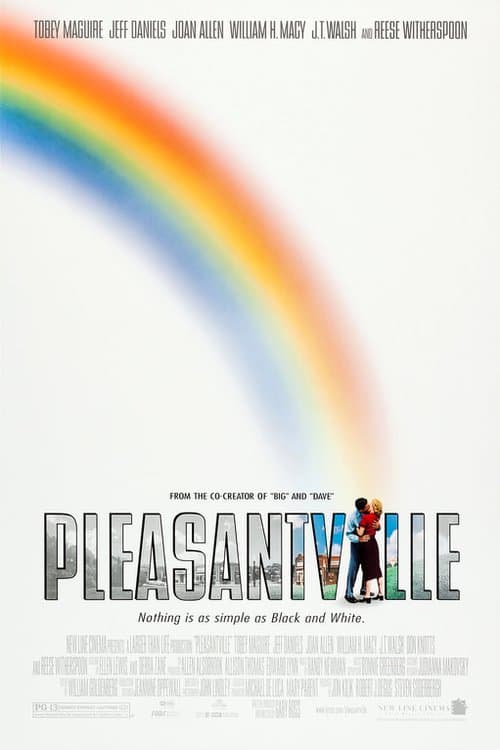
Pleasantville
Two teenagers land inside a perfectly controlled 1950s sitcom, and the film asks not 'how do I escape' but 'what am I willing to feel?' You're invited into a world where safety and stasis depend on emotional numbness-where the cost of order is the suppression of authentic feeling. The central shift is understanding that awakening isn't intellectual; it's visceral. It happens in the body, in genuine emotion, in the willingness to feel things that don't fit the script. The film suggests that the spread of consciousness happens person to person, not through arguments but through the contagion of authentic feeling. What starts as individual awakening ripples outward, destabilizing the systems built on conformity. It asks: what emotions are you keeping in black and white to feel safe? And what color would your world become if you let yourself feel fully?
What Pleasantville may shift in how you see everyday reality
This film may shift your relationship with conformity from something external to something you actively maintain through emotional suppression. Watching this, you may find yourself questioning what authentic feelings you might be preventing yourself from experiencing.
Questions to hold after watching Pleasantville
What would happen if you allowed yourself to feel everything you're currently controlling?
How much of your ordinariness is a choice versus what you've inherited?
What happens when one person's awakening disrupts the system everyone depends on?
What would change in your world if you stopped moderating your feelings?
Pleasantville themes worth sitting with
- what you keep in black and white to feel safe
- the cost of fitting in versus the cost of becoming fully yourself
- how genuine emotion transforms the world around you
- what you are afraid to feel fully